A building is not a static object. It is a dynamic assembly of interdependent systems working simultaneously. From elemental to non-typical types, we explore the basics of systems and how coordination is key to building successful projects.
In the AEC industry, technical knowledge is a valuable asset. What sets a high-performing team apart is how well they share their experience. At Corbis, we run technical lunch-and-learns to help our team share their expertise. These sessions let our professionals talk about real projects, construction methods, and new technologies. In this article, we take a closer look at the first one: building systems.
Understanding building systems
A building is not a static object. It is a dynamic assembly of interdependent systems working simultaneously. Building systems include the architectural, structural, mechanical, electrical, plumbing, and life-safety subsystems that, together, provide stability, enclosure, environmental comfort, sanitation, energy distribution, safety, and operational control. Conceptually, these systems can be understood as layers of performance:
#The structural system provides resistance and stability.
#The architectural system defines enclosure and spatial organization.
#Mechanical and electrical infrastructures regulate climate and energy.
#Plumbing ensures a water supply and waste management.
#Fire protection and security systems safeguard occupants.
At a higher level, digital platforms such as Building Management Systems (BMS) and Building Automation Systems (BAS) help monitor and improve a building's operations throughout its lifetime. These systems turn a simple structure into a functional, comfortable space that meets all codes.
Elemental building systems
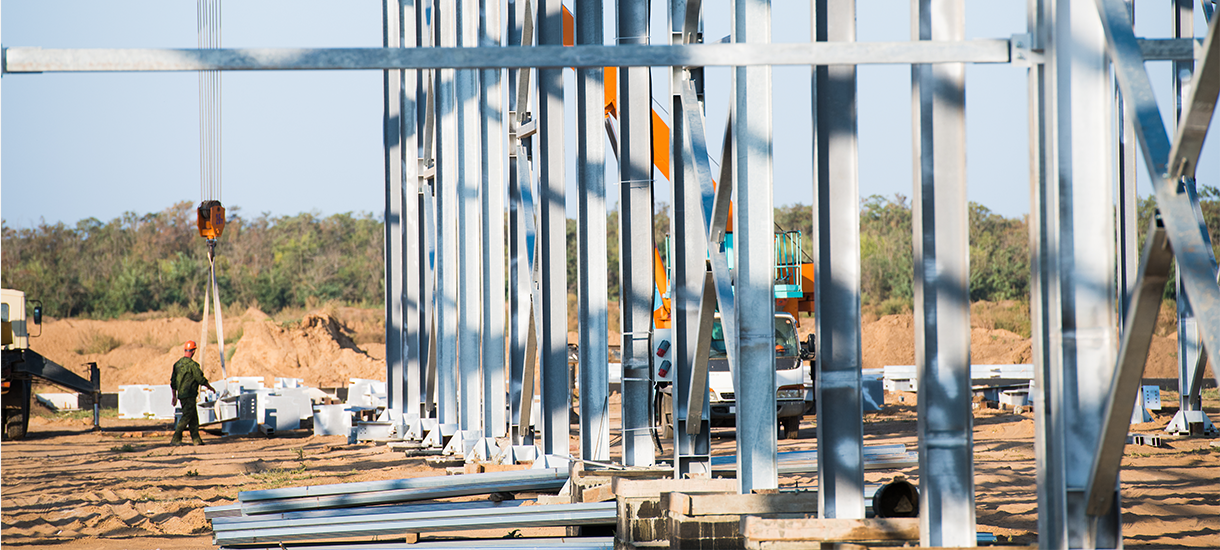
Elemental building systems form the physical and material backbone of any project. They are tangible and measurable, and make the building structurally possible and operationally usable. Without them, a building cannot stand, protect, or serve its occupants.
This group includes architectural façades and exterior envelopes that protect from environmental exposure, interior partitions and finishes that organize space, and circulation elements that enable movement. It also encompasses structural framing systems such as reinforced concrete, precast concrete, structural steel, wood framing, and CLT systems, each providing load-bearing capacity and lateral resistance.
Environmental control and habitability rely on HVAC for heating, cooling, and ventilation. The systems also include electrical distribution and lighting. Plumbing provides water supply, hot water, drainage, and sewage. Wastewater treatment and fire protection networks use sprinklers, alarms, and smoke controls.
Building Management Systems (BMS)
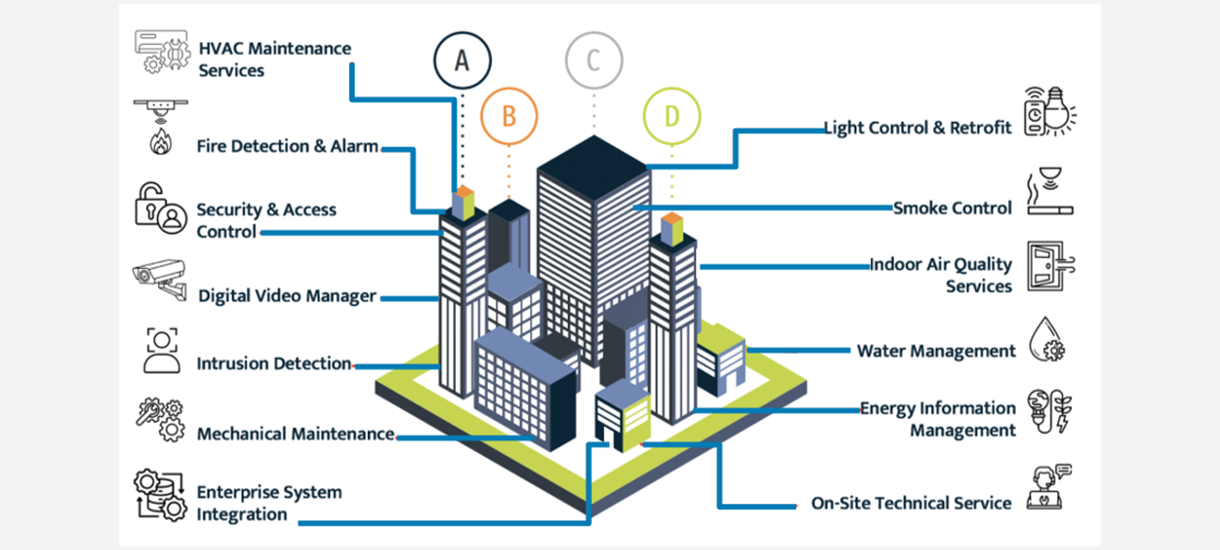
While elemental systems form the physical body of a building, the BMS acts as the brain. This works as a centralized intelligence layer that integrates and oversees multiple subsystems.
A BMS does not supply heating or electricity directly; instead, it monitors HVAC, electrical usage, lighting, plumbing, fire safety, and security through a unified interface. Tools such as energy dashboards, chiller plant supervision, air quality tracking, maintenance alerts, performance reports, and fault detection analytics enable operators to monitor and optimize building performance over time.
The real value of a BMS is how it brings everything together and helps people make better decisions. It turns separate systems into one well-coordinated operation.
Building Automation Systems (BAS)
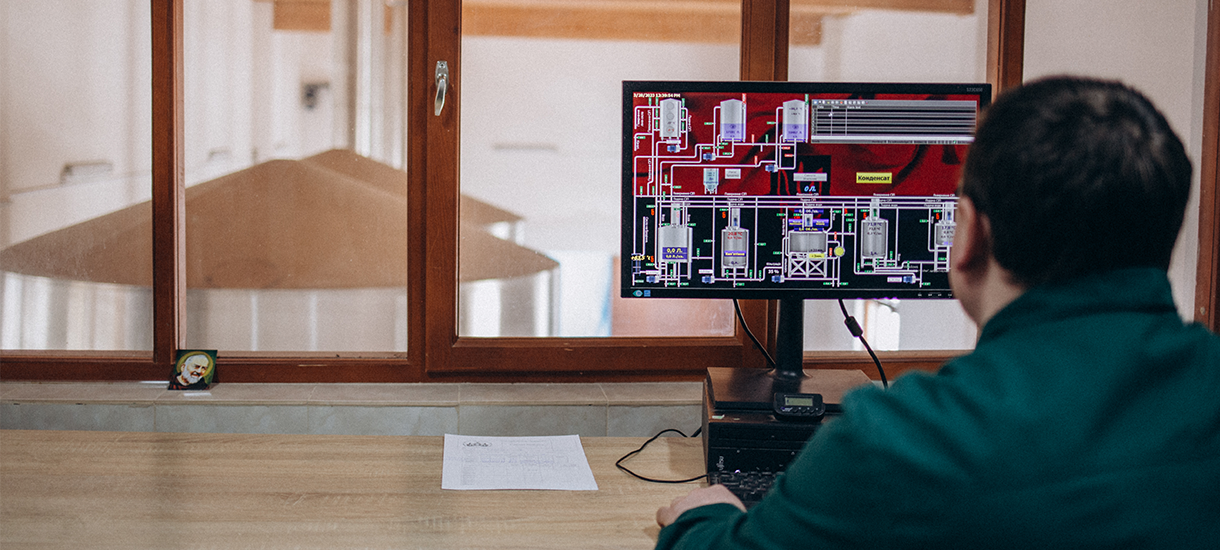
If a BMS represents strategic supervision, the BAS operates at the real-time execution level. It directly introduces operational intelligence into subsystems via sensors, controllers, and actuators.
These systems regulate smart heating and cooling equipment, adjust ventilation rates, control solar shading devices, modulate artificial lighting based on daylight sensors, manage automatic irrigation systems, and supervise access with face recognition or QR codes. HVAC control systems combine equipment, temperature and humidity sensors, and controllers that adjust settings as needed.
A BAS lets buildings respond autonomously to changes in the environment and the number of people inside. Its main job is to improve operations right away, not just oversee everything.
Specialized system types
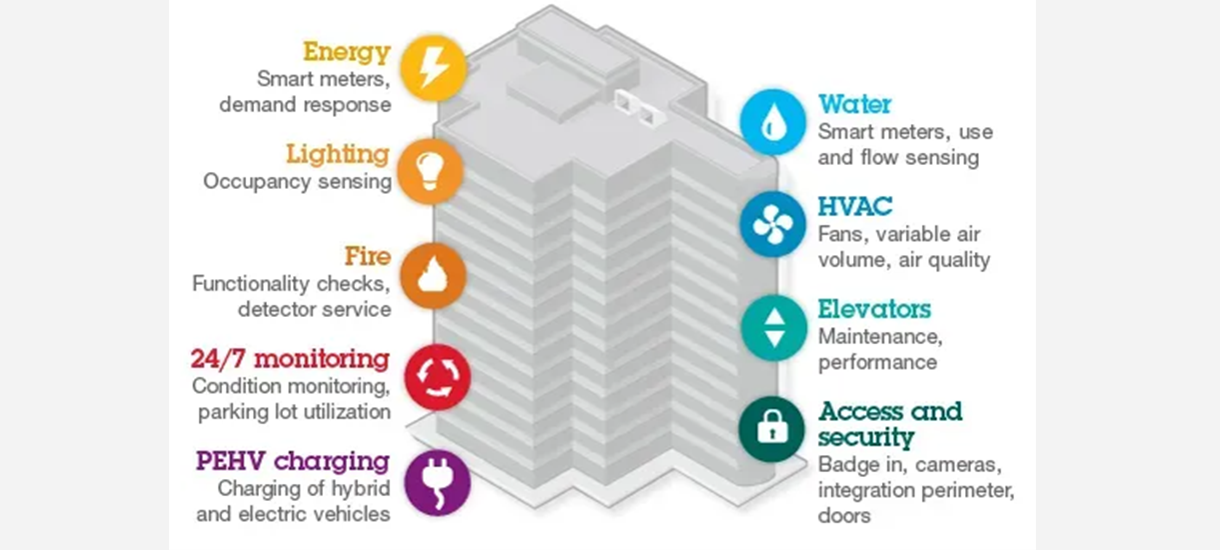
Some building types require infrastructure beyond conventional systems. For example, in healthcare environments, pneumatic tube systems, also known as tube mail systems, facilitate the rapid and secure transportation of laboratory samples, blood units, medications, and documents between departments. Their purpose is to achieve logistical efficiency and reduce time in critical medical workflows.
Medical gas systems deliver oxygen, nitrous oxide, compressed air, and vacuum to operating rooms and intensive care units. They include monitoring devices, pressure regulators, alarms, and safety shut-off valves to ensure reliability in critical situations.
In commercial buildings, integrated security systems combine surveillance cameras, access control, intrusion detection sensors, and alarm networks to protect occupants and assets while maintaining operational continuity.
These specialized systems show that infrastructure must address programmatic complexity, regulatory requirements, and the operational needs unique to each project.
Systems in practice: architecture, structure, and MEPF
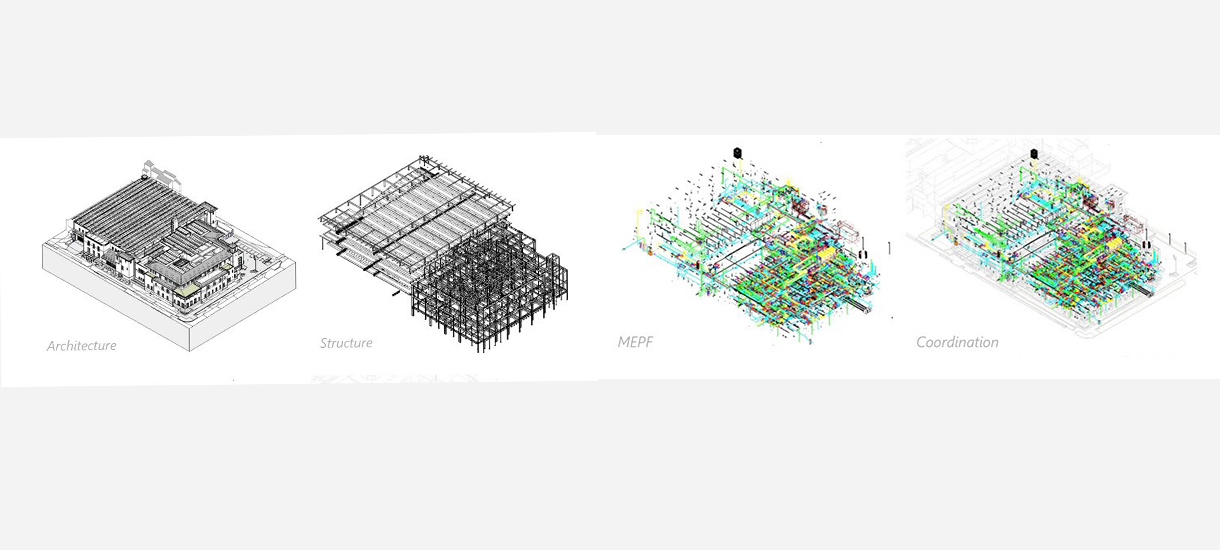
From a delivery perspective, building systems ultimately converge into three primary domains: architecture, structure, and MEPF. These disciplines determine how infrastructure, automation, and spatial performance are physically integrated within a project.
# Architectural systems include façade assemblies, exterior envelopes, interior partitions, and components for spatial separation. These systems define the interface between interior and exterior environments and directly influence thermal performance, acoustic behavior, and user experience.
# Structural systems ensure stability and resistance. Whether through precast concrete framing, structural steel systems, CLT panels, or hybrid construction methods, the structure must coordinate spatially and dimensionally with every other discipline.
# MEPF systems integrate mechanical installations such as HVAC networks, electrical power distribution and emergency systems, plumbing infrastructure for supply and drainage, and fire protection systems. Advanced workflows, such as Scan to BIM, combined with intelligent data analysis, continue to expand how these systems are documented and coordinated within digital environments.
Understanding the interdependency of these domains is essential. None of them functions effectively in isolation.
The role of coordination
Understanding elemental systems, management platforms, automation layers, and specialized infrastructure is only the first step. The main challenge is to integrate them early, verify them continuously, and align them across disciplines.
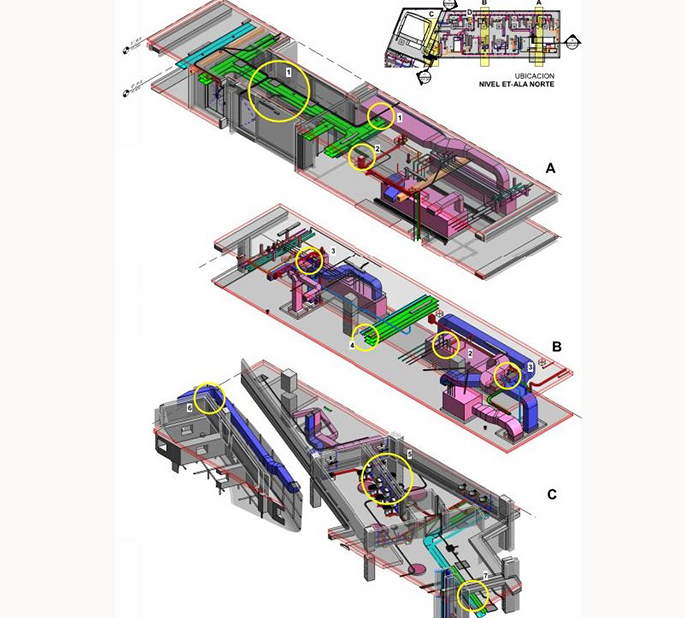
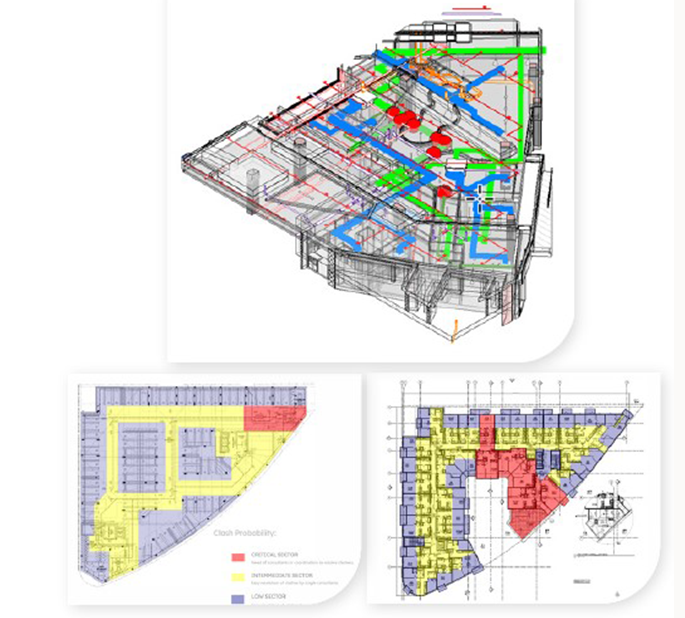
Architectural intent, structural geometry, and MEP routing must always be aligned. This prevents spatial conflicts, inefficiencies, and construction errors. Risk mitigation uses BIM workflows, disciplined version control, centralized issue tracking, clash detection, and two-dimensional overlay reviews as part of the design process. Here, coordination is not a final checklist; it is a core design strategy. When systems are designed as interdependent from the outset, the result is not only a compliant building but also one that is resilient, efficient, and constructible.
Read more about Design Coordination.

